Thursday, 19 January 2012

George square statues


I've walked past the statues in George square hundreds of times, and I was vaguely aware of a couple of the historical characters they're based on, but to be honest I didn't really give them much thought - they were just background to wherever I was going (possibly a pub). However, apart from the Cenotaph, the Robert Burns and James Watt Statues, I didn't really know the rest, so it was a bit of a surprise to find out that they read a bit like history's who's whom:

Sir Walter Scott
Queen Victoria and Prince Albert
Sir Robert Peel
William Gladstone
Thomas Graham (Chemist at Glasgow uni)
Thomas Campbell (poet)
Field Marshall Lord Clyde (Soldier, obviously)
Sir John Moore
James Oswald (MP from 1832)

I know that most British cities have these tableau of famous historical people, but I do find them fascinating; these are records of what the people of a city found important at one time. They wanted the present and the future to know that they respected these people, it wasn't so much the image of the person being celebrated, it was also the image (usually Victorians) wanted to present of what the implied values were of celebrating such people, because these things cost money and valuable space so political consensus would be needed. The statues are a combination of politics, fighting, poetry, and science. Just like the Victorian era, really.

Wednesday, 21 December 2011

On this day...

21st December, 1898

 Huband-and-wife team The Curies discover radium. This was at a time of huge excitement over radiation - certain elements were discovered to be emitting more energy than existing scientific ideas could account for - but nobody knew that radiation was actually bad for you. It wasn't just radium (named after how radioactive it was) they discovered, Polonium (named after Poland, Maries home) was one they discovered just before.
 These were exciting times; Becquerel had shown that uranium could give x-rays, not getting the energy from somewhere else, but actually getting the energy from the uranium itself. Marie showed that the energy was coming from the atoms of the uranium. As this went against everything known about energy transfer at the time, Marie was understnadably cautious that no-one would take her seriously, but at the same time was determined to get it out there as quickly as possible so that no other scientist would get the credit (and the race was on - interest in this field was, excuse the pun, hot).
 Marie was instrumental in inventing a technique that made it easier to seperate the radium from radioactive residues, to pursue possible healing properties. Both the curies worked completely exposed to radium innocent to radiation poisoning, so they had no idea they were damaging their health. This probably had no significant effect on Pierre, who was killed on the 19th April 1906 in a street accident - he was run over by a horse, and fractured his skull. They had been co-rewarded the 1903 nobel prize, and Pierre had been given a proffesorship at the Sorbonne, but unfortunately he hadn't had long to enjoy it.
Marie was devastated, but she continued her work, suffering depression and kidney failure, because she felt that her work was important. In 1910, she finally succeeded in isolating pure radium. However, the radium choloride she and pierre first made together was used as a primitive cancer therapy, which is why she spent her life advocating radium and roadioactivity.
 Back at the turn of the 20th century, radiation was almost magical, but scientifically proven, so people trusted it to have magical properties. It could cure cancer, depression, all kinds of problems; radium 'health' spas popped up. Water impregnated with radium sold by the expensive bottle. An American playboy, Ebers Myers, was advised by his doctor to drink radium water. There were plenty of frauds out there who sold normal water and just kidded on it was radium water, but Ebers was so rich that he could get hold of the real stuff. He died from jaw cancer. Radiation is deeply dangerous stuff. Because it glows in the dark (it produces its own light), radium in the form of paint was used on watches; women in the factories would lick the paintbrush to get a fine line, exposing themselves to radiation. Most of them died from various cancers, but - caught up in litigation - the manufacturers insisted they had syphilis. However, in the investigation it was found that management had taken the precautionary principle and protected themselves from exposure to radon.
However, at no point did Marie ever find out that her lifes work was damaging her. All that stuff was still in the future. She died from aplastic anaemia in 1934, almost certainly brought on by the decades of radiation exposure.She had carried test tubes containing radioactive isotopes in her pocket and stored them in her desk drawer, remarking on the pretty light that the substances gave off in the dark. In fact, her notebooks are still so highly radioactive they are too dangerous for naked hands to handle, and portective clothing must be worn if you want to take them out of the lead-lined boxes.
 Radon is a highly dangerous radioactive material. It has caused suffering. But Maries work was important. Radon was used to treat cancer, and who knows how long otherwise it might have taken for cancer therapies to go down that road, where they would almost certainly have used radon as well. To understand why atoms emit their own radiation spontaneously was an important step in understanding how our universe works. Her discoveries helped build a framework for other discoveries to be made in this field, and others, a faltering and clumsy perpetual drift of science towards the truth.

Friday, 2 December 2011

Chaplin, the Keystone years


Chaplin was a 1992 bio-pic about, well, Charie Chaplin. I watched it back in the early 90s and, although I liked the film, it did seem to reinforce the prejudice I had that he wasn't really that funny. Then a few years ago, I saw a great series of programmes on the BBC by Paul Merton on the silent comedians, and I realised how wrong I was. And how wrong this film was for not really explaining why he was as funny as he was.
The film did make some effort to explain the politicised nature of his films, but it gave the impression that this was an internal thought of Chaplins, rather than what everyone knew and commented on at the time and earned Chaplin acclaim from his peers - and, more importantly for an artist, the paying audience - which is a shame because unless you understand that his films were popular and funny because they had a political and social edge to them, then it all just becomes a mess of pratfalls and tumbling.
The film uses a fairly hackneyed approach to autobiographies, the dramatic flashbacks, as Chaplin discussed his biography with a fictional book publisher (played by Anthony Hopkins). Robert Downey Junior as Chaplin makes the film on its own very watchable, and there's an excellent supporting cast.
The movie gets stuff mostly right, it's just that it doesn't explain enough for them to be put into a context where the viewer can understand their significances. He was sent to the workhouse and seperated from his older brother, Sidney, his mother did have to be committed, he did fall in love with a 16-year old dancer, and he did go to perform in America.
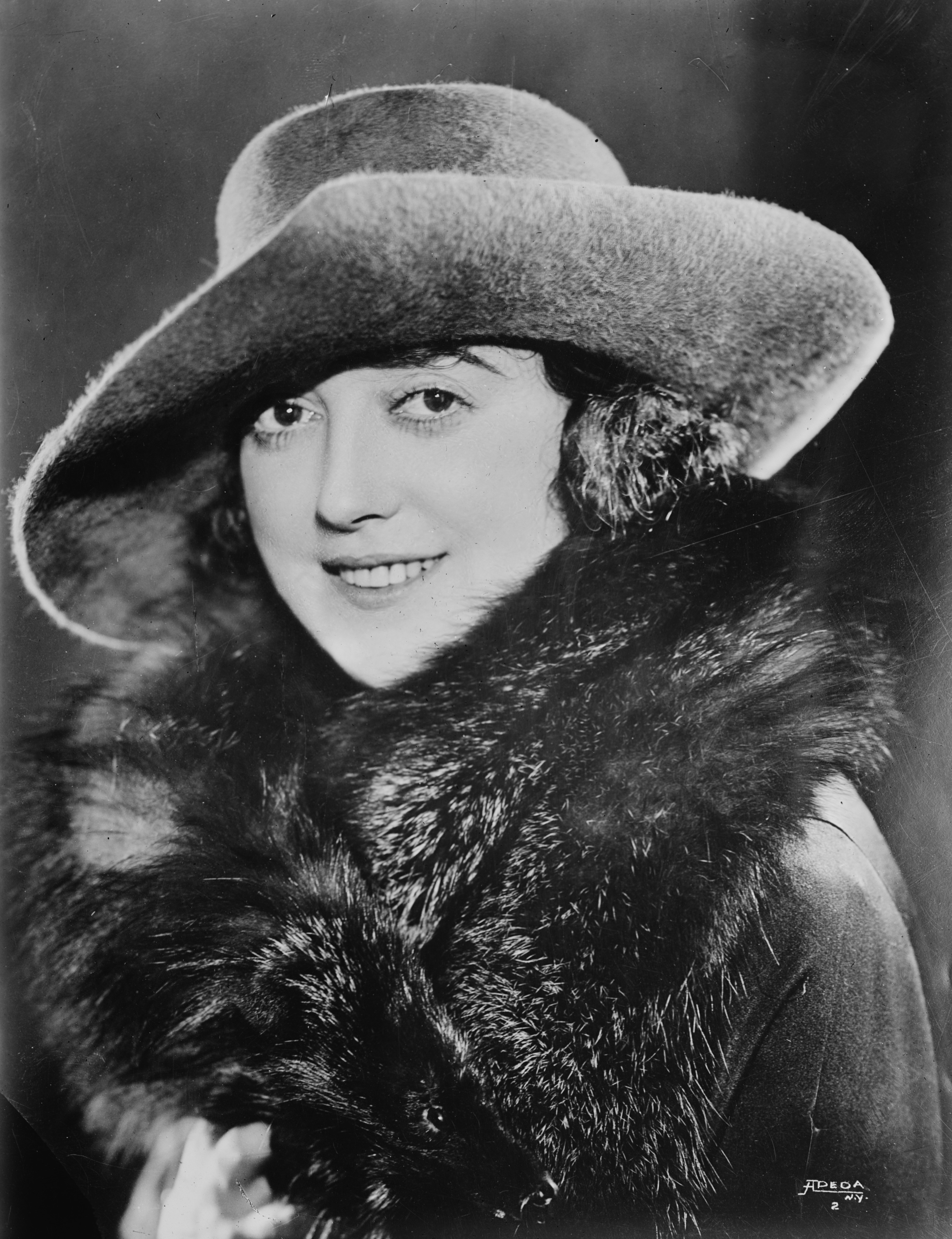
Mabel Normand
Also, of course, he did get an offer to work at Sennets Keystone (of the Keystone cops) studios. He started in 1914 and leaving a year later with 34 shorts and one feature under his belt. He was directed by Mabel Normand, which he hated (he hated being directed in general and, well, this was 1914 and he almost certainly was annoyed at being directed by a woman). One thing about Mabel should be noted; in the movie she's portrayed as a spoilt brat who is Mack Sennett's mistress, and she hated Chaplin.In reality, while she was in a relationship with Mack, she was an accomplished comedy actress from a stage-performing family who probably was the one who convinced Sennett to keep Chaplin on when he initially regretted hiring him and wanted to sack him. She seems to have been an intelligent woman who died at an absurdly early age due to alcohol abuse, at 37 (she didn't seem to be able to cope with the murder of a close friend in the 1920s).
 Movies weren't anything like what we would recognise today. For one thing, actors weren't billed in the credits or adverts, so when an actor/character became popular, cinema managers couldn't ask for more stuff with the famous guy in it, because they didn't have their name. So, instead, they had to use descriptions of what they looked like (no talkies back then).
Although Keystone was an experimental playground in slapstick, that's to underestimate its relevance to Chaplin and to cinema. Another thing they got right in the film was how short and how cheap these movies were, but by getting the slapstick into the one frame it developed a trend for spectacle to be packed into the frame as much as possiblem, which is something that's been with hollywood ever since.
He invented the costume whilst casting about in wardrobe for Mabels Strange predicament (so the movie got that right), and it was the Keystone films where his career in social and political commentary began. Whilst being directed, he had bits where he got to make authority figures look foolish, where he learned how to play this contempt to a movie audience, but when he started to direct is where he bloomed. The movie got that right, too. It's a shame they couldn't have gone into more detail on this, as those movies are what got audiences amused by him into audiences that made him into a cultural icon.

Wednesday, 30 November 2011

The corn laws and Peterloo

In 1813, a House of Commons Committee recommended excluding foreign-grown corn until domestically grown corn reached £4 per quarter. What this was was protectionism, a way to force the British public to buy British corn, and it was passed as law in 1815.
The date is no coincidence. The war with France had ended in 1814, Waterloo was in June 1815, and the concern was that imported corn would drive down the cost of British corn, producing less money for farmers (and, of course, for the land-owning gentry who taxed the farmers).
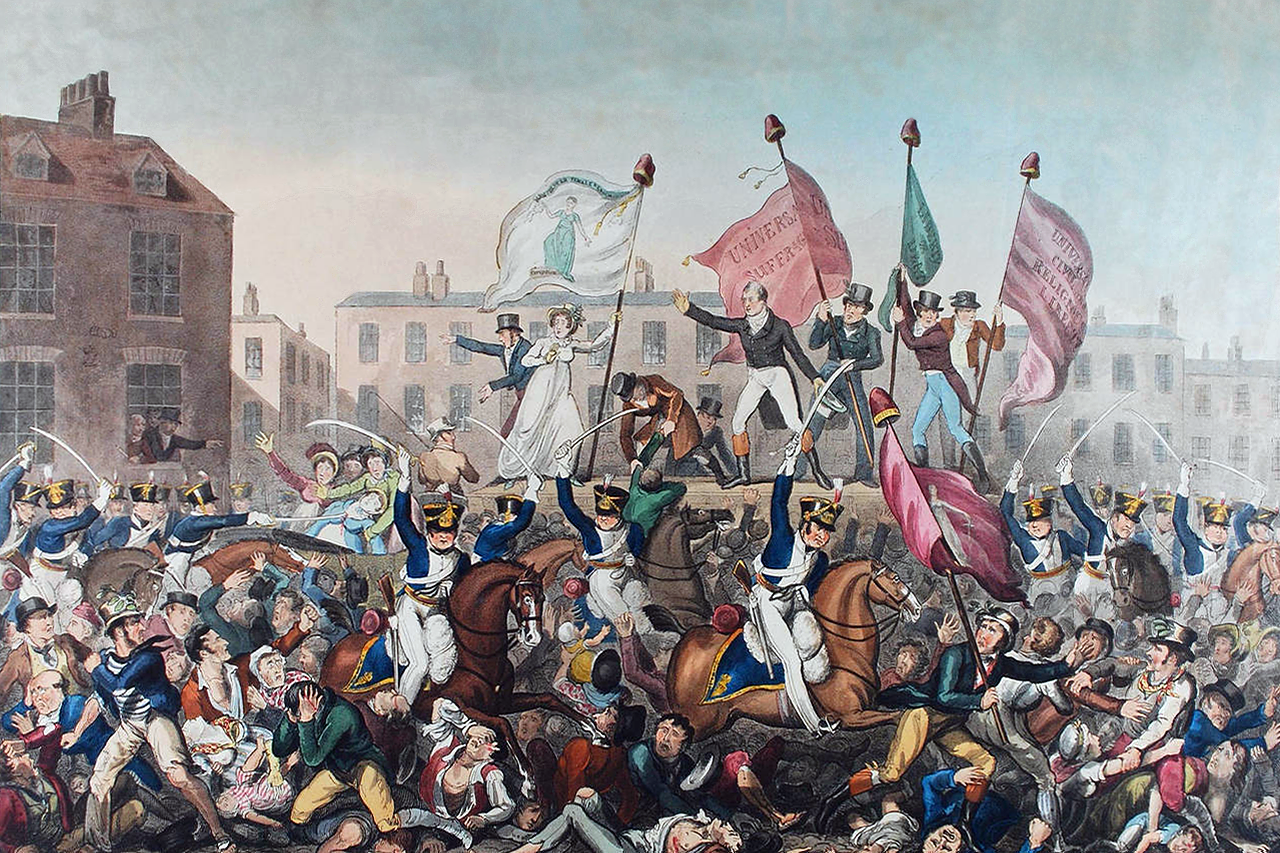
Peterloo massacre, Manchester, 1819
This was very much in the zeitgeist. In 1812, wheat had risen to 126s, mirroring the widespread economic distress of that year, the Luddites had just started machine-wrecking (made a capital offence in 1812), and PM Spencer Perceval was assassinated (replaced by Lord Liverpool, who made history by being the first fatal casualty of a train crash). No wonder the government were periodically obsessed that the Great British Public were going out of their heads in a mob mentality. The public were suffering because financial interests were doing everything they could to get more money out of them, and these financial interests were the politicians! Back then, gentry became MPs because, well, they were the only ones who could afford it – the system didn't pay a wage to become an MP, so you needed your own private income (as well as paying for your election campaign). And it was thought (by the gentry) that landowners had a higher stake in their constituency than your common man, they would work harder for its interests. It's this same mentality that required you to be a landowner of wealth to be an officer (which is why the sale of ranks was so profitable in the Victorian era that financial organisations existed to transact the sale of military ranks to anyone who wanted to impress the ladies with a military rank, and was minted. It wasn't like he would be putting his life in much danger - the Victorian era was a period with relatively few wars. Plenty of conflicts, rebellions, mutinies, sieges, though, but statistically speaking he was probably going to be alright).
Anyway, the public were paying higher prices for bread, so it was hated by the majority. In a lot of cases, bread had become unaffordable. This all came to a head in 1819 when, after protests in Birmingham, Leeds, and London, there was another one in Manchester. 60,000 people attended a lawful protest - general members of the public. The speaker, Orator Hunt, was arrested, and the yeomanry charged at the crowd to get them to disperse (instigated by a panicked Tory magistracy). About a dozen people were killed, and it was then sardonically labelled 'Peterloo' by the radical writers of the time. There's quite a good website about it here.
The protests had been about a lot of things – parliamentary reform, the corn laws, being the two most popular – but by calling it 'Peterloo' the implication was that this was a war against the poor by a corrupt, repressive authority. That Peterloo still exists as a word in contemporary culture shows that those early 19th century radical writers were probably onto something. Also that politics never really changes, it just does and says slightly different things, sometimes it's like politicians just get reincarnated into newer generations of politicians.

Tuesday, 25 October 2011

The 25th of October

 On this day, the British attacked the Russian guns in Balaclava on what would inspire the poem 'the charge of the light brigade' byTennyson, a poem that simultaneously praises the brigade whilst mourning the futility of the charge, whilst also criticising the leaders (but in that Victorian way of not naming names).
 The Crimean war was one that had a lasting effect on the British public. This was the war that made a name of Florence Nightingale, the nurse and writer and statistician who ran a reform campaign to improve the conditions of sanitation in hosptials.
 Curiously, for an event that was so influential on the media of the time, and has remained in our collective memory as a result, I was only able to find two films about it (both called The charge of the light brigade). Apparently the 1936 version is much more historically innacurate than the 1968 version, but that was the intention of the screenwriter as it had based it on research done into the battle,and he had aimed to be realistic. And Britain in the 60s had a strange kind of fascination with the Victorian (and Edwardian) era,probably because it felt quite far away in time but still also quite close - the Empire might have ended in the 50s, but Britain would still be living with the legacy of empire for decades to come; not just in terms of international relations, but also re-defining what Britain was. In the 1960s, it was obvious that the sun had set, but it was still a part of culture, and I think this confusion can be seen in the pop culture of the 60s - interest in the past, but also a reinvention of British icons as something that definitely didn't represent an empire.

Monday, 17 October 2011

Apologies.

 For the last week, I have been having technical problems with my blog. For some reason, it was having a problem with the guest blog byDavid Siwik (below). Initially, it wouldn't load up the pictures, and then only some of them, and then it missed out the first line that introduced the author. I've got it fixed now, to what it should have been originally, so hopefully it won't go weird on me again.

Wednesday, 12 October 2011

 Just found an advert in an old Coatbridge and Airdrie advertisier, 1910:

J. LIzars' cinematograph
 An entertainment unsurpassed. New subjects - Humorous, Scenic,, Sensational, and Moral Pictures - suitable for consorts, soirees, childrens parties.

LIZARS OPTICAL LANTERNS
Are optically and Mechanically first-class Throughout. Full-sized instruments from 25s. Slides 6d per dozen.
101 Buchanan street, Glasgow.


 A cinematograph was a film camera that also acted as a movie projector and a developer. This advert is a little window into the life of Coatbridge in 1910 - there was no local fleapit for the masses to go and watch silent reels yet, so the relatively well off hired them out. Remember, 25 shillings was worth £110 in todays money, back at a time when miners were earning around 30 shillings a week, so this advert is very much an indicator of the class divide in Coatbridge at the time.