Showing posts with label film. Show all posts

Wednesday, 16 May 2012

Worst artists in the world?


File:Edwood1.jpg
Wood
File:William McGonagall.jpg
McGonagall

Was William Mcgonagall the 19th century Ed Wood?
 Whilst it would be great to get Johnny Depp to play the official worst poet in the world (Vogon poetry doesn't count), are there any parallels between these two curious cultural icons?
 Both are regarded as the 'worst' in their fields. Not merely bad, anyone can simply be bad at something, but comically bad. Their work contains what the industry and the public regard as elementary errors that are so apparent that they are comical.
 However, the key is unintentional errors. If the errors appeared to be intentional, then they would lose their comedic appeal. The comedy arises from the delusion of greatness.
 William McGonagall was poet, and didn't he know it. His poems inadequately use poetic metaphor, and don't scan properly. Here's a sample of his most famous, the Tay Bridge disaster:

Beautiful Railway Bridge of the Silv'ry Tay!
File:Original Tay Bridge before the 1879 collapse.jpgAlas! I am very sorry to say
That ninety lives have been taken away
On the last Sabbath day of 1879,
Which will be remember'd for a very long time.

 Edward Wood was an American filmmaker from the 1950s, who produced, directed, edited, authored, and starred in his own films. His productions were B-movies, with little commercial success, and were also created by his enthusiasm and lack of recognition of his limits. It was only decades later that his movies acquired a cult status, and as a result he is one of the most famous movie makers of Hollywood.
 William McGonagall also had no care for recognition from his peers, and made his money from performing his work in front of a crowd. Audiences would jeer and pelt him with fruit, for which he would recieve up to 15 shillings a night. He seemed to believe that the queen had enjoyed his work, due to a polite letter from the palace thanking him for his poem, and tried to perform for the queen after walking from Dundee to Balmoral. He was stopped by security. Whilst it has been suggested he was playing up to the crowd for money, I don't think this is the case. He went out of his way to perform, going over to America or walking 60 miles to see the queen, the sort of poetry most people write in primary school. I think he genuinely did believe in his talents. Like Ed Wood, who continued in his career long after common sense should have told him to stop.
 Both died penniless and were cruelly mocked by their peers and the public. Both had to be rediscovered by later generations. And both took mediocrity and produced strangely timeless work that's quite enjoyable.

Friday, 2 December 2011

Chaplin, the Keystone years


Chaplin was a 1992 bio-pic about, well, Charie Chaplin. I watched it back in the early 90s and, although I liked the film, it did seem to reinforce the prejudice I had that he wasn't really that funny. Then a few years ago, I saw a great series of programmes on the BBC by Paul Merton on the silent comedians, and I realised how wrong I was. And how wrong this film was for not really explaining why he was as funny as he was.
The film did make some effort to explain the politicised nature of his films, but it gave the impression that this was an internal thought of Chaplins, rather than what everyone knew and commented on at the time and earned Chaplin acclaim from his peers - and, more importantly for an artist, the paying audience - which is a shame because unless you understand that his films were popular and funny because they had a political and social edge to them, then it all just becomes a mess of pratfalls and tumbling.
The film uses a fairly hackneyed approach to autobiographies, the dramatic flashbacks, as Chaplin discussed his biography with a fictional book publisher (played by Anthony Hopkins). Robert Downey Junior as Chaplin makes the film on its own very watchable, and there's an excellent supporting cast.
The movie gets stuff mostly right, it's just that it doesn't explain enough for them to be put into a context where the viewer can understand their significances. He was sent to the workhouse and seperated from his older brother, Sidney, his mother did have to be committed, he did fall in love with a 16-year old dancer, and he did go to perform in America.
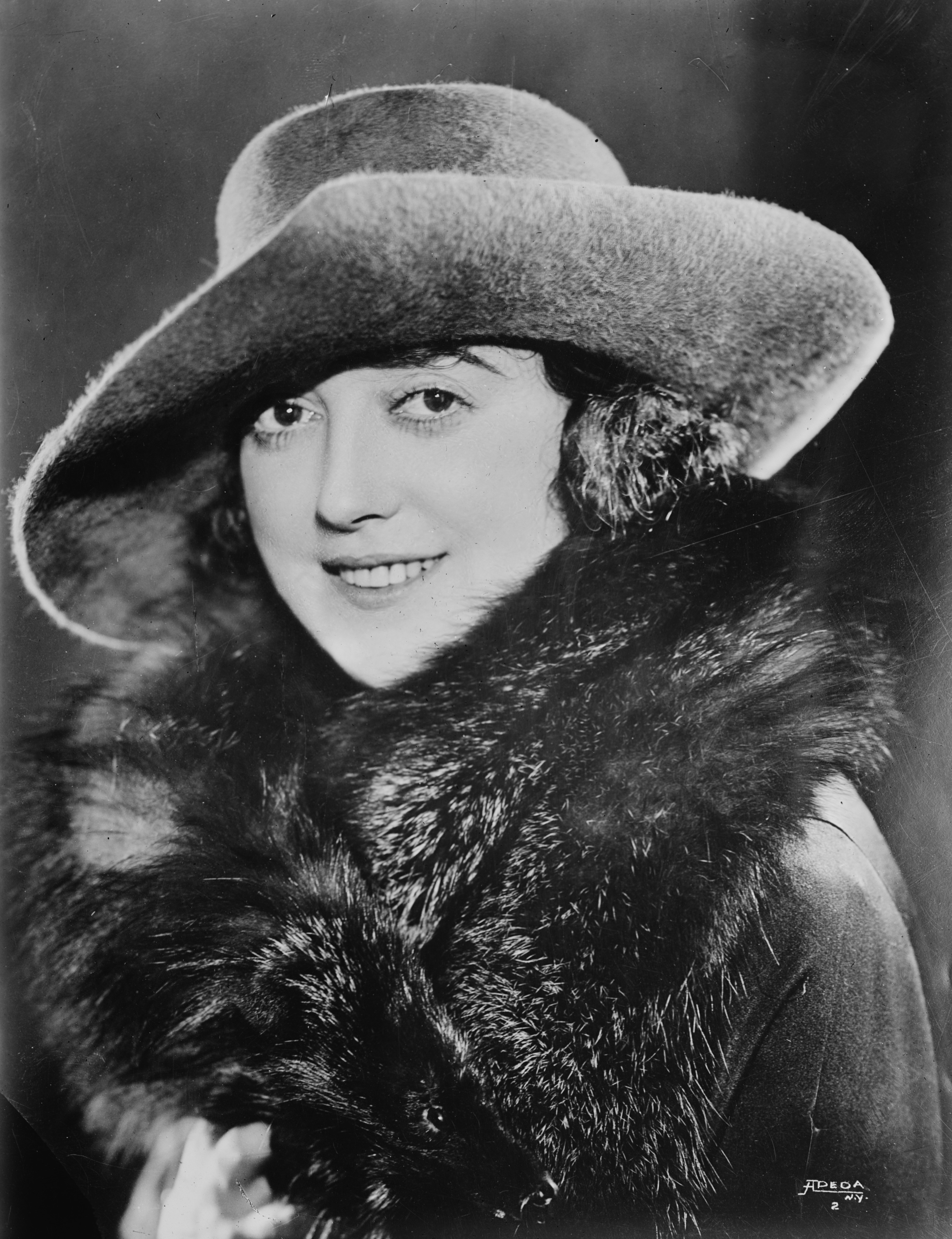
Mabel Normand
Also, of course, he did get an offer to work at Sennets Keystone (of the Keystone cops) studios. He started in 1914 and leaving a year later with 34 shorts and one feature under his belt. He was directed by Mabel Normand, which he hated (he hated being directed in general and, well, this was 1914 and he almost certainly was annoyed at being directed by a woman). One thing about Mabel should be noted; in the movie she's portrayed as a spoilt brat who is Mack Sennett's mistress, and she hated Chaplin.In reality, while she was in a relationship with Mack, she was an accomplished comedy actress from a stage-performing family who probably was the one who convinced Sennett to keep Chaplin on when he initially regretted hiring him and wanted to sack him. She seems to have been an intelligent woman who died at an absurdly early age due to alcohol abuse, at 37 (she didn't seem to be able to cope with the murder of a close friend in the 1920s).
 Movies weren't anything like what we would recognise today. For one thing, actors weren't billed in the credits or adverts, so when an actor/character became popular, cinema managers couldn't ask for more stuff with the famous guy in it, because they didn't have their name. So, instead, they had to use descriptions of what they looked like (no talkies back then).
Although Keystone was an experimental playground in slapstick, that's to underestimate its relevance to Chaplin and to cinema. Another thing they got right in the film was how short and how cheap these movies were, but by getting the slapstick into the one frame it developed a trend for spectacle to be packed into the frame as much as possiblem, which is something that's been with hollywood ever since.
He invented the costume whilst casting about in wardrobe for Mabels Strange predicament (so the movie got that right), and it was the Keystone films where his career in social and political commentary began. Whilst being directed, he had bits where he got to make authority figures look foolish, where he learned how to play this contempt to a movie audience, but when he started to direct is where he bloomed. The movie got that right, too. It's a shame they couldn't have gone into more detail on this, as those movies are what got audiences amused by him into audiences that made him into a cultural icon.